
Details
DRM: Adobe DRM
Weitere Details
Adam Daniel Moore
1. Auflage 2012
01.09.2012
English
480 S.
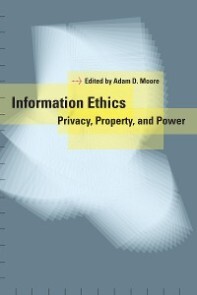
Information Ethics
eBook - Privacy, Property, and Power
Beschreibung
This anthology focuses on the ethical issues surrounding information control in the broadest sense. Anglo-American institutions of intellectual property protect and restrict access to vast amounts of information. Ideas and expressions captured in music, movies, paintings, processes of manufacture, human genetic information, and the like are protected domestically and globally.
The ethical issues and tensions surrounding free speech and information control intersect in at least two important respects. First, the commons of thought and expression is threatened by institutions of copyright, patent, and trade secret. While institutions of intellectual property may be necessary for innovation and social progress they may also be detrimental when used by the privileged and economically advantaged to control information access, consumption, and expression. Second, free speech concerns have been allowed to trump privacy interests in all but the most egregious of cases.
At the same time, our ability to control access to information about ourselves--what some call "informational privacy"--is rapidly diminishing. Data mining and digital profiling are opening up what most would consider private domains for public consumption and manipulation.
Post-9/11, issues of national security have run headlong into individual rights to privacy and free speech concerns. While constitutional guarantees against unwarranted searches and seizures have been relaxed, access to vast amounts of information held by government agencies, libraries, and other information storehouses has been restricted in the name of national security.
Über Adam Daniel Moore
Adam D. Moore is assistant professor of philosophy and also teaches in the Information School at the University of Washington.
Inhalt
Acknowledgments
1. Introduction--Adam D. Moor and Kristene Unsworth
Part I. An Ethical Framework for Analysis
2. Introduction to Moral Reasoning--Tom Regan
3. Utilitarianism--John Stuart Mill
4. The Metaphysics of Morals--Immanuel Kant
5. Feminist Transformations of Moral Theory--Virginia Held
Discussion Cases
--Trapped in an Underwater Sea Cave
--The Case of Reluctant Donation
--Killing 1 to Save 9
--Torturing for Good Consequences
Part II. Intellectual Property: Moral and Legal Concerns
6. Intellectual Property is Still Property--Frank H. Easterbrook
7. Are Patents and Copyrights Morally Justified?--Tom G. Palmer
8. Biopiracy or Bioprivateering?--Richard Stallman
9. Intangible Property: Privacy, Power, and Information Control--Adam D. Moore
10. Why Collaborative Free Works Should be Protected by the Law--Lawrence Sanger
Discussion Cases
--Libraries and Fair Use
--No Harm No Foul--Right?
--Making an Extra Back-up Copy; File Sharing
Part III. Privacy and Information Control
11. The Right to Privacy--Samuel D. Warren and Louis D. Brandeis
12. The Social Life of Genes: Privacy, Property, and the New Genetics--Margaret Everett
13. Employee Monitoring: Evaluation Surveillance v. Privacy--Adam D. Moore
14. Personal Autonomy and Caller ID--James Stacey Taylor
Discussion Cases
--Video Voyeurs and Privacy
--Menos Greece and Sickle-cell Anemia
Shahar v. Bowers
Part IV. Freedom of Speech and Information Control
15. Rationales for Freedom of Speech--Kent Greenawalt
16. Digital Speech and Democratic Culture: A Theory of Freedom of Expression for the Information Society--Jack M. Balkin
17. Privacy, Photography, and the Press--T. Allen et al.
Discussion Cases
--Who Owns Your Image: Cape Pub. v. Bridges, Florida 1982
Sipple v. San Francisco Chronicle Inc.
Photographs and the Protest against the War in Vietnam
Part V. Governmental and Societal Control of Information
18. Carnivore, the FBI's E-mail Surveillance System: Devouring Criminals, Not Privacy--Griffin S. Dunham
19. Privacy Isn't Everything: Accountability as a Personal and Social Good--Anita Allen
20. National Security at What Price? A Look into Civil Liberty Concerns in the Information Age under the USA Patriot Act--Jacob R. Lilly
Discussion Cases
--Encryption and National Security
--Wearing an Anti-Disclosure Suit
--Racial Profiling and Terrorism
Selected Bibliography
Index
E-Book Informationen
Alle hier erworbenen E-Books können Sie in Ihrem Kundenkonto in die kostenlose PocketBook Cloud laden. Dadurch haben Sie den Vorteil, dass Sie von Ihrem PocketBook E-Reader, Ihrem Smartphone, Tablet und PC jederzeit auf Ihre gekauften und bereits vorhandenen E-Books Zugriff haben.
Um die PocketBook Cloud zu aktivieren, loggen Sie sich bitte in Ihrem Kundenkonto ein und gehen dort in den Bereich „E-Books“. Setzen Sie hier einen Haken bei „Neue E-Book-Käufe automatisch zu meiner Cloud hinzufügen.“. Dadurch wird ein PocketBook Cloud Konto für Sie angelegt. Die Zugangsdaten sind dabei dieselben wie in diesem Webshop.
Weitere Informationen zur PocketBook Cloud finden Sie unter www.meinpocketbook.de.
Allgemeine E-Book-Informationen
E-Books in diesem Webshop können in den Dateiformaten EPUB und PDF vorliegen und können ggf. mit einem Kopierschutz versehen sein. Sie finden die entsprechenden Informationen in der Detailansicht des jeweiligen Titels.
E-Books ohne Kopierschutz oder mit einem digitalen Wasserzeichen können Sie problemlos auf Ihr Gerät übertragen. Sie müssen lediglich die Kompatibilität mit Ihrem Gerät prüfen.
Bei E-Books, die mit Readium LCP geschützt sind erscheint bei dem ersten Öffnen auf ihrem Reader ein Hinweisfenster mit der Aufforderung ein Passwort einzugeben. Gleichzeitig öffnet sich ein Infofeld in dem das Passwort steht. Tragen Sie dieses Passwort in das Eingabefeld ein und bestätigen Sie die Eingabe. Danach öffnet sich das E-Book automatisch.
Um E-Books, die mit Readium LCP geschützt sind auf einem Tablet/Laptop/Smartphone lesen zu können, benötigen Sie ein Programm, das in der Lage ist, mit dem Kopierschutz umzugehen. Das ist z.B. der Thorium Reader (Windows, Mac, Linux) oder die PocketBook App (iOS, Android).
Fügen Sie das heruntergeladene E-Book in das Programm ein. Beim ersten Öffnen erscheint ein Hinweisfenster mit der Aufforderung ein Passwort einzugeben. Gleichzeitig öffnet sich ein Infofeld, in dem das Passwort steht. Tragen Sie dieses Passwort in das Eingabefeld ein und bestätigen Sie die Eingabe. Danach öffnet sich das E-Book automatisch.